
eBook
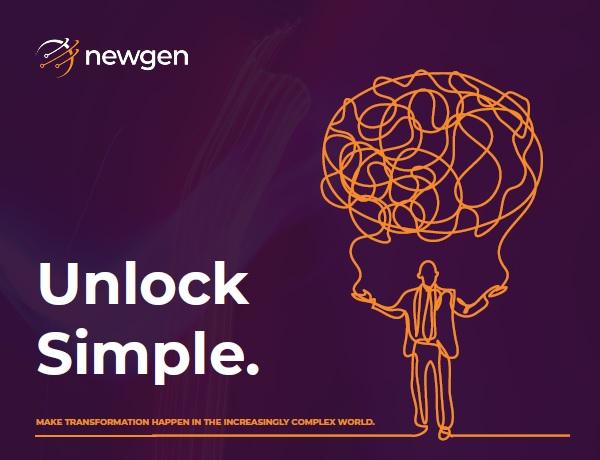
Unlock Simple
Make transformation happen in the increasingly complex world.
The Growing Challenge of Complexity
In every large organization today, complexity is an invisible force that slows progress, drains productivity, and complicates transformation. As enterprises expand, add products, integrate new technologies, and operate across geographies, they unintentionally create layered processes, disconnected systems, and operational silos.
While the intention is to simplify and scale, the outcome is often the opposite more complexity, more inefficiency, and less agility. Transformation begins to feel like rolling a tangled ball of wool, with every department pulling its own thread and tightening the knots.
Jack Welch’s famous advice resonates now more than ever:
“For a large organization to be effective, it must be simple.”
To thrive amid disruption, enterprises must learn to unlock simplicity not by ignoring complexity, but by addressing and managing it intelligently.
The Transformation Trap: When Complexity Becomes the Silent Killer
Complexity is inherent in growth. As organizations scale, they multiply their systems, data sources, and dependencies. Over time, this operational clutter becomes a silent killer of profitable growth.
Common Manifestations of Complexity
- A customer onboarding process that should take minutes instead takes days due to multiple approvals and disconnected systems.
- Billing errors remain unresolved for weeks because data is trapped across applications.
- Orders worth millions get delayed due to a lack of process visibility or limited capacity of knowledge workers.
Each of these is a symptom of systemic complexity where people, processes, and technology lose alignment.
Why Addressing Complexity Feels So Difficult?
The more enterprises attempt to control complexity, the deeper they sink into it. This is because most organizations tackle the symptoms not the source of inefficiency.
Hidden Causes of Complexity
- Teams and processes misaligned with business priorities.
- Mountains of content and data with no contextual access.
- Lack of real-time visibility into operations and insights.
- Technology leaders constantly chasing automation trends without a unified strategy.
To add to this, rapidly changing customer expectations, evolving regulations, and expanding digital ecosystems amplify the challenge. The key lies not in eliminating complexity but in addressing controllable complexity the kind that can be streamlined and simplified.
Unlocking Simplicity: The Strategic Mindset
Simplicity is not the absence of complexity it’s the mastery of it.
What Unlocking Simple Really Means?
- Simple doesn’t mean easy: It means processes are designed for clarity and efficiency.
- Simple doesn’t mean stripped-down: It means focusing on what matters most.
- Simple doesn’t mean ignoring complexity: It means understanding and managing it intelligently.
By embracing this philosophy, enterprises can move from a state of chaos to a state of controlled agility where transformation becomes sustainable.
The Root of the Problem: Organizational Silos
Silos are the single biggest obstacle to achieving enterprise-wide agility. They isolate departments, fragment customer journeys, and delay innovation.
How Silos Hurt Businesses?
- Customer journeys break when a process gets stuck between systems.
- Employees lose time searching for information buried across repositories.
- Innovation stalls because teams cannot collaborate effectively.
Every effort to improve customer experience, enhance efficiency, or accelerate change fails if silos remain unaddressed.
Addressing Controllable Complexity with Platforms
The most effective way to bridge silos is through unified platforms that connect people, processes, and information across the enterprise.
How NewgenONE Bridges Complexity?
- Intelligent Process Automation: Streamlines workflows and breaks process silos.
- Contextual Content Services: Brings structured and unstructured data together for easy access.
- Omnichannel Customer Engagement: Ensures consistent, personalized communication.
- AI and Data Science: Introduces predictive intelligence for faster, more accurate decisions.
- Low-Code Development: Enables rapid innovation by reducing dependency on IT.
By integrating these technologies, organizations can shift from piecemeal automation to enterprise-scale transformation.
Unlock Simple at Enterprise Scale
The path to true simplicity lies in enterprise-wide automation connecting front, middle, and back offices through a seamless flow of data, insights, and decisions.
3 Steps to Enterprise-Wide Transformation
- Automate Digital Journeys
Link every customer touchpoint to the back-end process for faster outcomes and better experiences. - Streamline Information Flow
Digitize and unify all information from documents to multimedia for universal access and real-time collaboration. - Accelerate Digital Innovation
Use low-code development to empower teams to build, deploy, and modify applications quickly, ensuring agility in response to change.
When enterprises bring automation, content, and intelligence together under one platform, they not only achieve efficiency but also set the foundation for continuous innovation.
NewgenONE: The Platform That Unlocks Simple
NewgenONE is the unified platform built to simplify complexity. It combines process automation, content management, customer engagement, AI, and low-code capabilities helping enterprises automate end-to-end and transform with agility.
Key Highlights of NewgenONE
- Unifies core business systems for seamless collaboration.
- Scales across processes, functions, and geographies.
- Enables faster go-live through low-code configurability.
- Provides intelligence-driven automation powered by AI and ML.
- Offers cloud, hybrid, and on-premises deployment flexibility.
For over three decades, Newgen has empowered enterprises worldwide to modernize operations, accelerate customer journeys, and innovate without disruption.
The Simplicity Advantage
Organizations that unlock simple achieve measurable transformation across key metrics:
- Faster decision-making through unified visibility.
- Higher operational agility with automation at scale.
- Improved employee productivity through contextual access.
- Enhanced customer experience across all touchpoints.
Simplicity doesn’t mean doing less it means doing more, smarter, and faster.
Conclusion: Make Simplicity Your Competitive Edge
In a world of increasing digital complexity, simplicity is the ultimate sophistication. Enterprises that embrace simplicity as a strategy not just an outcome are the ones best equipped to thrive in disruption.
With NewgenONE, organizations can move beyond fragmented automation toward connected, intelligent, and scalable transformation empowering people, streamlining operations, and enhancing customer experience.
Now is the time to unlock simple across strategy, operations, and technology.
