AI has changed how businesses work. But, adopting new technologies is only the beginning. The real challenge is making them work together to improve efficiency, reduce cost, and deliver better outcomes.
In 2027, leaders will need to look beyond individual AI tools. Success will depend on how effectively enterprises connect intelligence, people, applications, and processes while maintaining trust, accountability, and operational control.
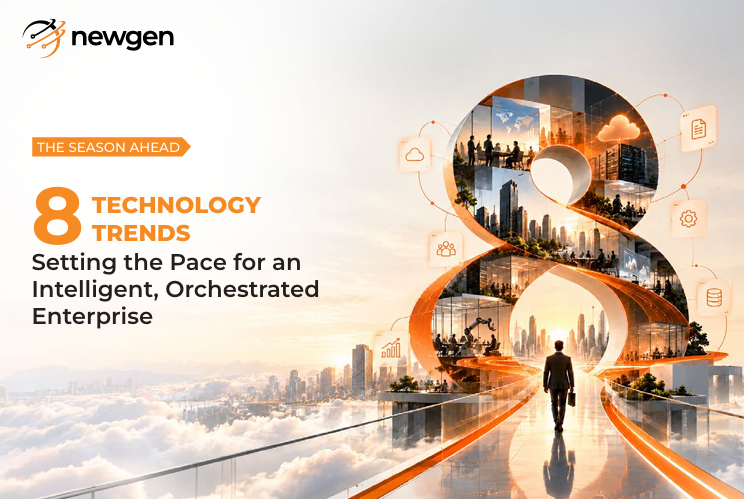
Newgen’s Technology Trends 2027 report examines eight emerging technology shifts that will influence how organizations operate, innovate, and compete.
What Will You Discover?
- Why orchestration is becoming central to enterprise AI success
- How emerging technologies are changing the way business processes operate
- Ways to make better use of enterprise information
- Why AI security, governance, and cost management are becoming business priorities
- What leaders must focus on to get real value from technology investments
The report goes beyond emerging trends to explain their business impact, practical applications, and strategic priorities shaping the road ahead.
Frequently Asked Questions
Enterprise technology trends for 2027 focus on intelligent automation, connected business processes, trusted enterprise knowledge, responsible AI, and sustainable technology economics. Newgen’s report examines eight shifts influencing enterprise technology strategies and operating models.
AI is expected to move beyond generating recommendations toward supporting coordinated business execution. Enterprises will focus on connecting AI capabilities with applications, workflows, employees, and governance mechanisms to improve operational performance.
Enterprise orchestration coordinates AI agents, applications, people, information, and business rules across end-to-end workflows. It helps organizations move beyond disconnected automation initiatives toward more consistent, accountable, and measurable outcomes.
Key challenges include fragmented workflows, unreliable enterprise information, unclear decision authority, security risks, rising technology costs, and difficulty demonstrating measurable business value.
Technology leaders should evaluate AI readiness across enterprise information, workflow integration, governance, infrastructure, and cost management. The priority is to establish operating foundations that support reliable AI execution and continuous innovation.
Enterprises can evaluate AI through process completion time, decision quality, exception rates, customer experience, employee productivity, and cost per completed outcome. These measures provide a more meaningful view of value than adoption metrics alone.