A US regional bank processes around 2,700 loan applications every month, with document-heavy work across intake, underwriting, and closing. Manual uploads, document checks, and review processes consumed valuable staff time and slowed loan processing.
With Newgen’s AI-powered Consumer Loan Origination System (LOS), the bank introduced AI agents to handle document intake, support underwriting reviews, and process closing packages. Built on NewgenONE Marvin, these capabilities work within the bank’s existing lending flow, helping teams spend less time on repetitive document tasks and more time on borrowers and credit decisions.
How Does AI Improve Consumer Lending?
Newgen’s AI agents support three critical stages of the lending process:
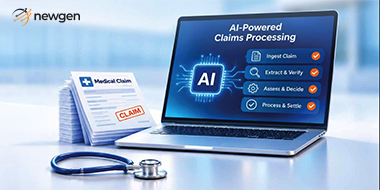
- Automated document intake: Classifies and indexes borrower documents, extracts metadata, and flags missing or duplicate files
- AI-assisted underwriting: Checks application information, identifies risks and policy exceptions, and prepares structured underwriting summaries
- Intelligent closing packages: Splits, classifies, and sorts bundled documents, routing uncertain items for human review
Underwriters retain full authority over credit decisions, while reviewers remain in control of document approvals and exceptions.
What Business Impact Does the AI-powered Consumer LOS Deliver?
- USD 2.66 million: Annual savings opportunity across intake, underwriting, and closing
- 43 minutes: Saved per loan at document intake
- 25 minutes: Saved per underwriting review
- 148 minutes: Saved per real estate closing package
- 7 FTEs: Underwriting capacity created
Explore how the bank uses AI to reduce document-heavy work, create underwriting capacity, and scale consumer lending with Newgen.
Frequently Asked Questions
AI can automate document intake, extract and validate information, identify missing documents, and support underwriting reviews. It can also process closing packages, reducing manual effort across the loan origination journey.
AI can classify borrower documents, split bundled files, extract metadata, identify duplicates, and flag missing information. Low-confidence items can be routed to human reviewers for verification.
Yes. AI can check application data for completeness and consistency, identify risks and policy exceptions, and prepare structured underwriting summaries. Human underwriters retain the authority to approve, decline, suspend, or request additional information.
AI reduces the time spent on manual document uploads, classification, information extraction, and initial underwriting reviews. In this case study, document intake time reduced from 50 to 7 minutes per loan, while underwriting review time reduced from 45 to 20 minutes.
AI can retrieve closing packages, split bundled files into individual documents, classify them, extract metadata, and route uncertain items for review. This helps reduce manual sorting and document handling.